
By - PolyEyes Staff
views 432
Walking is No Longer Just a Choice—It’s a Constitutional Right
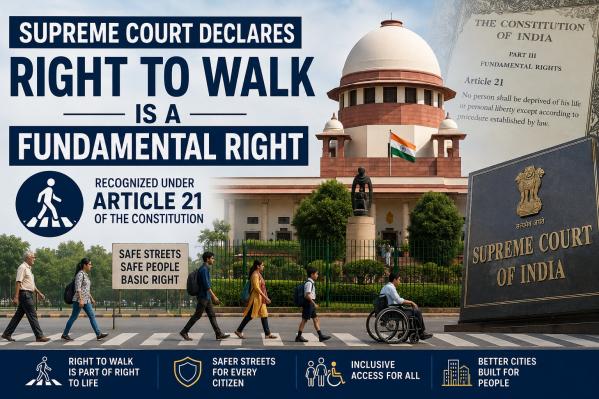
In a landmark observation that could reshape urban planning, public infrastructure, and road safety across India, the Supreme Court has declared that the Right to Walk is a Fundamental Right under Article 21 of the Constitution, which guarantees the Right to Life and Personal Liberty.
The ruling comes as a powerful reminder that roads are not meant exclusively for vehicles. Every citizen, regardless of age, income, or social status, has the right to move safely and freely on foot. For millions of Indians who rely on walking as their primary mode of transportation, this judgment is being hailed as a historic step toward inclusive development.
Why the Supreme Court’s Observation Matters
India's cities have witnessed rapid urbanization over the past two decades. Flyovers, expressways, and widening roads have often taken priority over pedestrian infrastructure.
As a result:
- Footpaths are either missing or encroached upon.
- Pedestrians are forced to walk on roads.
- Road accidents involving pedestrians continue to rise.
- Elderly citizens, women, children, and persons with disabilities face daily challenges while walking.
The Supreme Court emphasized that a civilized society cannot ignore the safety and dignity of pedestrians. Safe walking spaces are not a luxury but an essential component of the right to live with dignity.
Right to Walk and Article 21
Article 21 of the Indian Constitution has evolved significantly through judicial interpretation. Over the years, courts have expanded its scope to include:
- Right to Privacy
- Right to Clean Environment
- Right to Education
- Right to Health
- Right to Livelihood
Now, the Right to Walk safely and conveniently has been recognized as part of this constitutional protection.
The Court observed that if citizens cannot safely use public roads on foot, their right to life and mobility is effectively compromised.
A Wake-Up Call for State Governments and Municipal Bodies
The judgment places greater responsibility on:
- State Governments
- Municipal Corporations
- Urban Development Authorities
- Public Works Departments
Authorities may now be expected to prioritize:
Better Footpaths
Every urban development project should include accessible pedestrian pathways.
Removal of Encroachments
Illegal occupation of footpaths by vendors, parking, or construction materials makes walking dangerous.
Universal Accessibility
Infrastructure should be designed keeping in mind:
- Senior citizens
- Persons with disabilities
- Pregnant women
- Children
Improved Road Safety
Pedestrian crossings, traffic calming measures, and proper lighting become crucial components of public infrastructure.
Impact on Smart Cities Mission
The ruling could significantly influence India's Smart Cities Mission.
For years, critics have argued that many "smart city" projects focused more on beautification and vehicle movement than pedestrian comfort.
The Supreme Court's recognition of walking as a fundamental right may push policymakers to redesign cities around people rather than automobiles.
Experts believe future urban planning models will increasingly emphasize:
- Walkability
- Sustainable transport
- Green mobility
- Public health
Economic Benefits of Walkable Cities
Creating pedestrian-friendly infrastructure is not just a social obligation; it also makes economic sense.
Research globally shows that walkable cities experience:
- Higher local business activity
- Reduced traffic congestion
- Lower healthcare costs
- Better environmental outcomes
- Increased tourism appeal
A city designed for walkers often becomes a city that attracts investment and talent.
Environmental and Health Advantages
Walking remains one of the simplest and healthiest forms of physical activity.
Encouraging walking can help address:
- Obesity
- Diabetes
- Heart disease
- Air pollution
- Carbon emissions
In an era of climate change, promoting walking aligns perfectly with India's sustainability goals.
Challenges Ahead
Despite the landmark ruling, implementation remains the biggest challenge.
Many Indian cities continue to struggle with:
- Poor urban planning
- Encroachment issues
- Limited budgets
- Weak enforcement mechanisms
Experts warn that legal recognition alone will not be enough unless governments actively invest in pedestrian infrastructure.
What This Means for Ordinary Citizens
The judgment empowers citizens to demand:
- Safe footpaths
- Proper pedestrian crossings
- Barrier-free mobility
- Accountability from civic authorities
Citizens and public interest groups may increasingly use this constitutional recognition to seek judicial intervention where pedestrian rights are neglected.
Final Verdict
The Supreme Court's declaration that the Right to Walk is a Fundamental Right marks a significant moment in India's constitutional journey. It reinforces the idea that development should serve people first, not just vehicles.
As India moves toward becoming a modern urban nation, this judgment sends a clear message: every citizen deserves the dignity, safety, and freedom to walk.
A truly developed society is not measured by the number of highways it builds, but by whether its citizens can walk safely on its streets.
Related Articles
-
🌊 BIOROCK, Coral Reefs & Rann of Kutch: The Future of Ocean Restoration & Climate Survival
Discover how Biorock technology is transforming coral reefs in the Rann of Kutch. A powerful climate solution for ocean restoration, biodiversity, and coastal protection....
 created by PolyEyes Staff | publish 11 hrs ago | last updated 11 hrs ago 848 views | 1 recommendations | 0 comments
 -
PM JANMAN Yojana 2026: India’s Most Powerful Tribal Development Mission Explained
PM JANMAN Yojana 2026 complete guide. Learn about benefits, budget ₹24,000 crore, PVTG development plan, states covered, and exam-ready notes for UPSC & JPSC....
created by PolyEyes Staff | publish 11 hrs ago | last updated 11 hrs ago 985 views | 1 recommendations | 0 comments -
🚀 Top AI Tools to Make Money Online in 2026 (India Edition – Real Income Blueprint)
2026 me AI tools se paise kaise kamayein? Blogging, AdSense, digital products, automation aur Shopify ke through real income generate karne ka complete India-focused blueprint....
created by PolyEyes Staff | publish 11 hrs ago | last updated 11 hrs ago 730 views | 1 recommendations | 0 comments -
🔥 Jhdugoda Tailing Pond Radiation: India’s Silent Nuclear Hazard Explained in Hinglish
Discover the hidden dangers of Jhdugoda tailing ponds in Jharkhand. Learn about nuclear radiation, health risks, environmental impact, and safety measures in uranium mining zones. Stay informed on radioactive contamination and its effects on local communities. ...
created by PolyEyes Staff | publish 11 hrs ago | last updated 11 hrs ago 684 views | 1 recommendations | 0 comments -
Zoho CRM Implementation - DIY vs Hiring a Zoho Partner
Zoho CRM is a powerful platform designed to help businesses manage leads, automate sales processes, and improve customer relationships....
created by Mr. Senthil Nath | publish 11 hrs ago | last updated 11 hrs ago 412 views | 0 recommendations | 0 comments -
Gogabil Jheel Declared Ramsar Site: Bihar Enters India’s Top 3 Wetland States as India Rises to Global Rank 3
Gogabil Jheel in Katihar, Bihar gets Ramsar Site status. India becomes Asia’s No.1 and World’s No.3 in wetlands with 94 Ramsar Sites. Full details inside....
created by PolyEyes Staff | publish 11 hrs ago | last updated 11 hrs ago 1212 views | 1 recommendations | 0 comments -
🌍 The Mysterious Twist of Earth: How the Coriolis Force Secretly Controls Our World!
Discover how the mysterious Coriolis force silently controls hurricanes, ocean currents, and flight paths — an invisible twist that keeps Earth’s systems in perfect motion....
created by PolyEyes Staff | publish 11 hrs ago | last updated 11 hrs ago 1225 views | 1 recommendations | 0 comments -
🔥 After 20 Long Years, India’s Only Mud Volcano Erupts Again in Andaman-Nicobar — Nature’s Hidden Power Unleashed!
India’s only Mud Volcano has erupted again after 20 years in the Andaman-Nicobar Islands. Discover what happened on October 2, 2025, why it’s a rare geological event, and how scientists are decoding this mysterious phenomenon....
created by PolyEyes Staff | publish 11 hrs ago | last updated 11 hrs ago 1212 views | 1 recommendations | 0 comments -
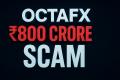
💥 “OctaFX ₹800 Crore Scam: How India Got Trapped in a Digital Money Maze!”
In a shocking turn of events, the Enforcement Directorate (ED) uncovered an ₹800 crore web of deceit, masterminded through OctaFX — an online forex platform promising easy wealth but allegedly running one of India’s biggest digital money-laundering rackets. Here’s the full inside story — how it bega...
created by PolyEyes Staff | publish 11 hrs ago | last updated 11 hrs ago 1108 views | 1 recommendations | 0 comments -
Prashant Kishor vs Tejashwi Yadav: Brain vs Street Power – Who Will Rule Bihar’s Future?
Prashant Kishor vs Tejashwi Yadav — Who has the real vision for Bihar? A spicy comparison of their education, political style, and roadmap for Bihar’s future....
created by PolyEyes Staff | publish 11 hrs ago | last updated 11 hrs ago 1551 views | 1 recommendations | 0 comments






-
Kakori Brand for GI-Tagged Malihabadi Dashehari Mango: How Uttar Pradesh Is Blending Heritage, History and Global Branding
July ,08 2026 - PolyEyes Staff -
JPSC PT Result Without Cut-Off, Final Answer Key Disputes & Just 16 Days for Mains: Why Aspirants Are Calling the 14th Recruitment Process Unfair
July ,06 2026 - PolyEyes Staff -
JPSC 14th Prelims Result Sparks Massive Controversy: No Cut-Off, No Member Signatures, Multiple Correct Answers – Is a Fresh Recruitment the Only Fair Solution?
July ,04 2026 - PolyEyes Staff -
Supreme Court Declares Right to Walk a Fundamental Right: A Landmark Victory for Every Indian
June ,22 2026 - PolyEyes Staff -
JPSC 14th Exam Faces Double Age-Cutoff Crisis: 2018 and 2022 — Why a Fresh Notification May Be the Only Fair Solution
June ,20 2026 - PolyEyes Staff -
Strait of Hormuz: How the Hormuz Crisis Could Trigger a Global Oil Shock and Impact India's Economy
May ,30 2026 - PolyEyes Staff -
🚀 Unemployment in India: Crisis, Causes & the Road to Jobs
April ,16 2026 - PolyEyes Staff -
🦋 Kya Aapko Pata Hai? Titli Ko Udne Ke Liye Do Baar Janm Lena Padta Hai
April ,13 2026 - PolyEyes Staff -
🌊 BIOROCK, Coral Reefs & Rann of Kutch: The Future of Ocean Restoration & Climate Survival
April ,12 2026 - PolyEyes Staff -
🌍 Oil War 2026: USA, Iran, Israel, Venezuela aur Petroleum ka Global Game (Aapki Pocket Ka Silent Killer 😅)
April ,06 2026 - PolyEyes Staff -
🛕🔥 Devari Mandir, Dhoni & CSK: IPL 2026 ka Divine Connection
April ,06 2026 - PolyEyes Staff -
Jharkhand Economy: Complete Notes for JPSC 2026 (Growth, Sectors, Challenges & Opportunities)
April ,05 2026 - PolyEyes Staff -
🤖 Best AI SEO Tools for Bloggers in 2026 (Rank Faster & Grow Traffic)
April ,05 2026 - PolyEyes Staff -
Jharkhand Industrial Policy (2001–2021): Complete Evolution, Analysis & JPSC PT Master Guide (2026)
April ,04 2026 - PolyEyes Staff -
🎓 Best AI Tools for Students in 2026 (Study Smarter, Not Harder)
April ,04 2026 - PolyEyes Staff

Sir I've lost my admit card and I also forget my roll no
Please help me in other ways

Dear Sir,
After login when i click on attempt button to take test a error msg show "Test series ended", plesae resolve this issue.
sir, my name is SWARUP ANAND, my DOB- 01/03/1984, my father’s name- SANTOSH KUMAR SRIVASTWA. I have loss my admit card. Please tell my roll number.
BPSC mains 56th-59th me Roll No. 119040 pass hai aur PT me fail. Mahabhrstachar hai. pls see it must
I am thankful for PolyEyes for most authentic Online BPSC Test Series. These Test are life support for working Aspirant.
sir please tell the authenticity of this news .there is no such news on bpsc website and i heard 17 june as the exam date .please clarify the doubt
r u providing test for BPSC in HINDI medium ?
plz intimate me through emails about BPSC test packages and details of packages and its rate. how many test and when it will be taken plz send details about ur package plans.
Yes Test is available in Hindi as well English and Total Number of Test and Registration details already given above
Best thing im loving about This Test series is its Explanation part. Crisp and to the Point. Thanku Polyeyes.
-
 All Stories
 -
Recently Published Stories
-
Most Viewed Stories
-
Just In Photos
-
Most Viewed Photos
