
By - PolyEyes Staff
views 2673
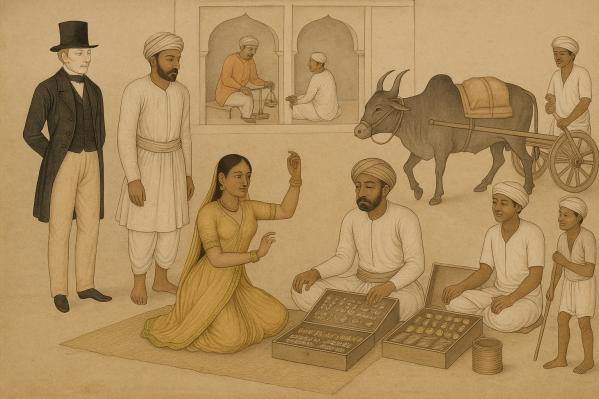
Introduction to Patna Kalam Art: Patna Kalam is a remarkable and historically significant school of painting that originated in Bihar during the late 18th to early 19th century. It evolved as a localized expression of the Mughal miniature tradition and became part of the broader Company School of Art. Unlike the grandeur-centric Mughal paintings that depicted royalty and courtly life, Patna Kalam focused on scenes from everyday life—tradesmen, artisans, festivities, and occupations formed the core of its visual narrative.
Historical Background of Patna Kalam: The roots of Patna Kalam can be traced back to the declining days of the Mughal Empire when artists began to seek alternative livelihoods outside royal patronage. Many painters from Mughal courts migrated to Bihar, especially to Patna, where they adapted their style to suit the preferences of British officials and Indian elites of the time. This art form thrived under the support of local nobility, colonial administrators, and wealthy businesspeople. European art also left a noticeable mark on Patna Kalam in terms of color usage, perspective, and themes.
Distinctive Features of Patna Kalam Painting
- Medium & Material: Artists used watercolors on paper or mica instead of traditional oil-based pigments.
- Minimalist Backgrounds: Unlike the elaborate settings in Mughal art, Patna Kalam featured minimal or no background to emphasize the subject.
- Fine Linear Details: Characterized by sharp and intricate lines, the figures in these paintings appeared realistic and vivid.
- Focus on Common People: Patna Kalam depicted the lives of everyday people—laborers, merchants, dancers, and festival-goers—setting it apart from royal-themed Indian art.
- European Influence: While maintaining a mostly two-dimensional style, some paintings adopted three-dimensional perspective influenced by Western techniques.
- No Ornamental Metals: In contrast to the luxurious gold and silver details in Mughal miniatures, Patna Kalam was more subdued, using vibrant colors and clean forms instead.
Popular Themes in Patna Kalam
- Social Occupations: Artists captured real-life scenes of barbers, moneylenders, shopkeepers, fishermen, and craftsmen at work.
- Festivals & Celebrations: Cultural events such as Diwali, Holi, Muharram, and traditional weddings were frequently illustrated.
- Colonial Influence & Courtroom Scenes: Interactions between Indian locals and British officials, as well as administrative settings, featured prominently.
- Animals & Nature: Elephants, horses, and birds were often depicted, adding a natural element to the storytelling.
Famous Patna Kalam Artists
- Seetaram: Known for his masterful portrayal of social life with intricate detailing.
- Hulas Lal: A key contributor to the evolution and spread of the Patna Kalam style.
- Zehra Lall: Celebrated for her delicate brushwork and artistic finesse.
The Decline of Patna Kalam: With the introduction of photography in the late 19th and early 20th centuries, the demand for hand-painted artworks like Patna Kalam began to diminish. British and Indian patrons turned toward photography for its realism. Additionally, industrialization and shifting artistic preferences played a major role in the gradual fading of this unique art form.
Legacy and Revival of Patna Kalam Painting: Despite its decline, Patna Kalam holds a cherished place in India’s cultural and artistic history. Institutions like the Patna Museum and Bihar Museum preserve several original pieces of this heritage. Today, art historians, scholars, and cultural organizations are working actively to document, exhibit, and revive the style. Through research, exhibitions, and modern adaptations, interest in Patna Kalam is experiencing a slow but steady resurgence.
Conclusion: Why Patna Kalam Matters Today: Patna Kalam stands out as a beautiful confluence of Mughal elegance, European realism, and Indian tradition. It’s not just a school of painting—it’s a lens into the lives of ordinary people in a changing historical period. Its emphasis on real life, everyday events, and social themes makes it a distinctive and invaluable part of India's art history. Ongoing preservation and revival efforts ensure that this extraordinary art form continues to inspire future generations.
Related Articles
-
Bharat Celebrates 150 Years of Vande Mataram — The Anthem That Awakened a Nation
Vande Mataram 150 years, Bankim Chandra Chatterjee biography, Indian freedom songs, national song of India history, Vande Mataram celebration 2025, Indian unity in diversity, patriotic events India 2025, Indian cultural heritage, Bharat Mata 3D art, proud to be Indian, Vande Mataram 150 years, Bhara...
 created by PolyEyes Staff | publish 11 hrs ago | last updated 11 hrs ago 1233 views | 1 recommendations | 0 comments
 -
Gen Z: The Most Powerful Generation Shaping the Future of Work, Money, and Culture
Discover Gen Z lifestyle, trends, work culture & digital habits. Explore how Generation Z is shaping the future of technology, marketing & society....
created by PolyEyes Staff | publish 11 hrs ago | last updated 11 hrs ago 3674 views | 1 recommendations | 0 comments -
🇮🇳 Maratha Military Landscapes Declared UNESCO World Heritage Site: India’s Fortified Legacy Goes Global
The Maratha Military Landscapes, featuring 12 iconic forts across Maharashtra and Tamil Nadu, have been declared a UNESCO World Heritage Site in 2025. Explore the history, significance, and travel details of these legendary Indian forts....
created by PolyEyes Staff | publish 11 hrs ago | last updated 11 hrs ago 1679 views | 1 recommendations | 0 comments -
Central Sanskrit University: The Grand Comeback of India’s Lost Cultural Treasure
Central Sanskrit University is leading a cultural renaissance by merging Sanskrit, ancient Indian knowledge systems, and modern technology. This is India’s intellectual comeback....
created by PolyEyes Staff | publish 11 hrs ago | last updated 11 hrs ago 1176 views | 1 recommendations | 0 comments -
🪆 Kanyaputri Dolls of Champaran, Bihar: India’s Intangible Cultural Asset with Global Heritage Value
Kanyaputri Dolls from Champaran, Bihar, are rare, handcrafted symbols of sibling love. Beyond tradition, they represent eco-conscious living, intangible cultural heritage, and a powerful model for rural women entrepreneurship and sustainable heritage investment in 2025....
created by PolyEyes Staff | publish 11 hrs ago | last updated 11 hrs ago 971 views | 1 recommendations | 0 comments -
🛕 Rajasthan’s Bahaj Village Unearths Ancient Remains from Mahabharata and Mauryan Periods
The ASI has discovered ancient urban remains from the Mahabharata and Mauryan periods in Bahaj village near Mathura. A historic moment for archaeology and Indian heritage....
created by PolyEyes Staff | publish 11 hrs ago | last updated 11 hrs ago 1349 views | 1 recommendations | 0 comments -
Vaishali Unveils Majestic Stupa-Inspired Buddha Samyak Darshan Museum – A New Global Buddhist Tourism Marvel
Explore the architectural marvel of the Buddha Samyak Darshan Sangrahalay in Vaishali, Bihar—built at a cost of ₹550.48 crore, sprawling over 72.94 acres, and adorned with 38,500 unique pink stones. A massive tourism magnet now open to the world....
created by PolyEyes Staff | publish 11 hrs ago | last updated 11 hrs ago 1434 views | 1 recommendations | 0 comments -
🧵 Kheta Embroidery Revival: Govt's ₹Crore Push to Empower Bihar's Artisans | NHDP, CHCDS, Bharat Tex 2025
Discover how the Government of India is transforming rural women artisans into global entrepreneurs through Kheta Embroidery of Bihar. Backed by NHDP, CHCDS, and Bharat Tex 2025—this initiative unlocks high-income, export-ready, and sustainable employment....
created by PolyEyes Staff | publish 11 hrs ago | last updated 11 hrs ago 1383 views | 1 recommendations | 0 comments -
World’s Tallest Freedom Icon! Dr. Rajendra Prasad’s 243-Meter Statue to Rise on Patna Marine Drive
Bihar is set to build the world’s tallest freedom fighter statue—243 meters high—honoring Dr. Rajendra Prasad on Patna Marine Drive. Know project details, cost, design, and political impact....
created by PolyEyes Staff | publish 11 hrs ago | last updated 11 hrs ago 2110 views | 1 recommendations | 0 comments -
Amir Khusrau: The Melodious Voice of Sufi Poetry and Cultural Harmony
Explore the life and legacy of Amir Khusrau, the 'Parrot of India,' whose contributions to Sufi poetry, Hindustani music, and cultural harmony embody India's rich syncretic heritage. Perfect for civil service insights....
created by PolyEyes Staff | publish 11 hrs ago | last updated 11 hrs ago 2636 views | 1 recommendations | 0 comments




-
Kakori Brand for GI-Tagged Malihabadi Dashehari Mango: How Uttar Pradesh Is Blending Heritage, History and Global Branding
July ,08 2026 - PolyEyes Staff -
JPSC PT Result Without Cut-Off, Final Answer Key Disputes & Just 16 Days for Mains: Why Aspirants Are Calling the 14th Recruitment Process Unfair
July ,06 2026 - PolyEyes Staff -
JPSC 14th Prelims Result Sparks Massive Controversy: No Cut-Off, No Member Signatures, Multiple Correct Answers – Is a Fresh Recruitment the Only Fair Solution?
July ,04 2026 - PolyEyes Staff -
Supreme Court Declares Right to Walk a Fundamental Right: A Landmark Victory for Every Indian
June ,22 2026 - PolyEyes Staff -
JPSC 14th Exam Faces Double Age-Cutoff Crisis: 2018 and 2022 — Why a Fresh Notification May Be the Only Fair Solution
June ,20 2026 - PolyEyes Staff -
Strait of Hormuz: How the Hormuz Crisis Could Trigger a Global Oil Shock and Impact India's Economy
May ,30 2026 - PolyEyes Staff -
🚀 Unemployment in India: Crisis, Causes & the Road to Jobs
April ,16 2026 - PolyEyes Staff -
🦋 Kya Aapko Pata Hai? Titli Ko Udne Ke Liye Do Baar Janm Lena Padta Hai
April ,13 2026 - PolyEyes Staff -
🌊 BIOROCK, Coral Reefs & Rann of Kutch: The Future of Ocean Restoration & Climate Survival
April ,12 2026 - PolyEyes Staff -
🌍 Oil War 2026: USA, Iran, Israel, Venezuela aur Petroleum ka Global Game (Aapki Pocket Ka Silent Killer 😅)
April ,06 2026 - PolyEyes Staff -
🛕🔥 Devari Mandir, Dhoni & CSK: IPL 2026 ka Divine Connection
April ,06 2026 - PolyEyes Staff -
Jharkhand Economy: Complete Notes for JPSC 2026 (Growth, Sectors, Challenges & Opportunities)
April ,05 2026 - PolyEyes Staff -
🤖 Best AI SEO Tools for Bloggers in 2026 (Rank Faster & Grow Traffic)
April ,05 2026 - PolyEyes Staff -
Jharkhand Industrial Policy (2001–2021): Complete Evolution, Analysis & JPSC PT Master Guide (2026)
April ,04 2026 - PolyEyes Staff -
🎓 Best AI Tools for Students in 2026 (Study Smarter, Not Harder)
April ,04 2026 - PolyEyes Staff

Sir I've lost my admit card and I also forget my roll no
Please help me in other ways

Dear Sir,
After login when i click on attempt button to take test a error msg show "Test series ended", plesae resolve this issue.
sir, my name is SWARUP ANAND, my DOB- 01/03/1984, my father’s name- SANTOSH KUMAR SRIVASTWA. I have loss my admit card. Please tell my roll number.
BPSC mains 56th-59th me Roll No. 119040 pass hai aur PT me fail. Mahabhrstachar hai. pls see it must
I am thankful for PolyEyes for most authentic Online BPSC Test Series. These Test are life support for working Aspirant.
sir please tell the authenticity of this news .there is no such news on bpsc website and i heard 17 june as the exam date .please clarify the doubt
r u providing test for BPSC in HINDI medium ?
plz intimate me through emails about BPSC test packages and details of packages and its rate. how many test and when it will be taken plz send details about ur package plans.
Yes Test is available in Hindi as well English and Total Number of Test and Registration details already given above
Best thing im loving about This Test series is its Explanation part. Crisp and to the Point. Thanku Polyeyes.
-
 All Stories
 -
Recently Published Stories
-
Most Viewed Stories
-
Just In Photos
-
Most Viewed Photos
