
By - Mr. S.N Singh
views 27294
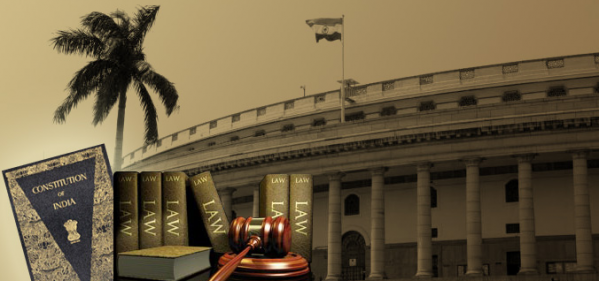
It was series of events which lead to the development of the constitution of India, the words largest written constitution. India has been a diverse country in respect of culture, people, and geographic terrain. So, was a challenging task for the makers of the constitution to form a supreme rule book according to which this rich diversified country can be effetely governed. Here below are series of Acts, Regulation and Declaration which gave shape to the Indian Constitution.
The Regulating Act ( May 3, 1773): In 1765, after the battle of Buxer the East India Company got the Diwani ( Right to collect Revenue) of Bengal , Bihar and Orissa. This made company as commercial cum political establishment in India. Meanwhile, the resultant administrative anarchy and the accumulation of immense wealth by company servants were questioned in British Parliament. As a result of that British government set up a secret committee to prove into affairs of the company. The report submitted by the committee paved the way for the act submitted by the parliament called Regulating Act to enforce the governmental control and regulate the affairs of the company.
- Presidency of Bengal was made supreme over those of Bombay and Madras. The governor of Bengal was designated as Governor- General of the three provinces. The governor general was given power of superintendence, direction and controls over two remaining territories.
- The Governor General was assisted by four councilors. Their tenure of office was fixed for 5 years. The Governor General the council of members was required to work on the principle of a collegiate executive.
- The Governor General was required to follow the orders of Directors and keep them updated about the all matters related to the interest of the company.
- The Governor- General was empowered to make rules ordinances and regulations for the better government of the company’s entire territories.
- The Supreme Court of Judicature was established at Calcutta, consisting of Chief Justice and three other Judges.
Bengal Judicature Act (1781): The Prime objective of this Act was to remove ambiguities about the powers and jurisdiction of the Supreme Court and define precisely its relation with the Governor General in council and the company courts, and also to make clear also about the laws the Supreme Court has to administer. It was clarified that Supreme Court has no jurisdiction in matters concerning revenue. The rules and forms of the Supreme Court were to respect the religion and usages of the people of India.
Pitt’s India Act (1784): In the title of the Act, the company’s territories were called “The British possessions in India”, this was the clear assertion that British Crown claimed the ownership over the territory acquired by company in India.
It established the board of control, which was to be appointed by the Crown. The Board was invested with the power to superintend, direct and control all civil, military and revenue affairs of the company.
The Act also created a department of British Government in England to exercise control over the Directors of the Company and the Indian administration.
Charter Act (1793): The Act extended company privileges for next 20 years and subsequently regulating act, charters acts were passed for every 20 years.
Charter Act (1813): Trade with India was opened to all British Citizen exception was tea trade and trade with China. The establishment of Church was established at the expense of the company in India.
Charter Act (1833): The Governor General of Bengal was designated as the Governor General of India. He was vested with the full authority to superintend, direct and control the government of all parts of India which included the matters, relating to the civil, military and revenue administration. The governor General of India was vested with the duty to pass the resolution to improve the condition of the Indian without hurting the sentiments of the native people.
Charter Act (1853): The Board of control was authorized to make rules and regulations governing appointments to the services in India. As a consequence of that the Civil Service examination was open to the public and entry to the service was made through the competitive examination. The Governor General Executive council was extended for legislative purpose.
The Act of Better Government of India or Government of India Act (1858) : This Act transferred the Government of India to the Crown from the Company and the east India company was abolished. The vested in Board of directors were got transferred to the Secretary of State (One of the cabinet minister of the British Government) the salary of secretary of state was paid from the Indian revenue.
Indian Council Act (1861): Indians were nominated for the first time to the legislative council for the purpose of legislation. The number of Indian in legislative council was 6 minimum and 12 maximum. These members were nominated by Governor General for the 2 years. The act provided for the local legislature for the Madras and Bombay and empowered the Governor General to establish similar local bodies in Bengal and other provinces.
Indian Council Act or Morley- Minto Reforms (1909): The comes from the John Morley, the secretary of State for India and Minto the then Viceroy and the Governor General of India. It had provision for the enlargement of the legislative councils and at the same time them more effective. The number od additional members were significantly increased.
- In the imperial council majority of the official members were maintained. However, In provincial councils, there were majority of Non – Official members, though not elected members, except in Bengal where there was small majority of elected members.
- The act provided for the appointment of Indian to the viceroy’s Executive council. The executive council was also enlarged. The members could now ask questions and even debate on the budget, but they could not vote on it.
- It also granted separate electrode to the Muslims.
The Government of India Act or Montagu Chelmsford Reforms (1919): The comes from the E.S Montagu, the then secretary of State for India and Lord Chelmsford the then Viceroy and the Governor General of India.
- The dyarchy was introduced, under it the ministers responsible to their respective subject held the charges of “Transferred subjects” while the provincial governors and his councilors were to be in charge of the “Reserved Subjects”.
- A bicameral legislature was set up at centre and a second Indian member was included in the Governor-General’s Executive Council.
- The Act provided for the establishment of Public service commission.
- The Act extended the communal electorate to the Sikhs, Europeans, Anglo-Indians and Christians.
The Government of India Act (1935): It was outcome of Simon Commission Report, deliberation at round table conferences, and the white paper introduced in the British Parliament. It was the longest and the last constitutional measure introduced by the British in India.
- It provided for the Federation of India consisting of Governor Provinces and Princely states. However, the federation never started as Princely state never joined.
- The Dyarchy introduced by 1919 Act was abolished and at its place provincial atomy was introduced. All subjects of provincial administration were placed in the hands of Ministers who belonged to the elected legislature.
- The Act gave special powers and responsibilities to the Governors, this effectively curbed the power of minister and undermined the provincial autonomy.
- The Act divided the British India into two categories- 2 Governor Provinces and 5 chief commissioner provinces.
- The Act enlarged the legislature in the provinces. Six provinces (Assam, Bengal, Bihar, Bombay, Madras, the united province) were to have bicameral legislature (Legislative council and Legislative assembly).
- Dyarchy which was abolished at provinces was established at centre. This means that the Reserved Subjects (Defense, External Affairs, Tribal Affairs, Etc.) were to be administered by the Viceroy and the Governor General.
- The Act separated Burma from India. Sind and North West Frontier Province were given the status of Province were given status of provinces.
Indian Independence Act (1947): The Act provided for the partition of India and the establishment of two dominions India and Pakistan on 15th August, 1947. All laws enforced in British India would remain applicable until amended by the dominion legislature.
Each dominion and all provinces were to governed as per the Government India Act 1935 till the formation of new constitution.
The Act provided the termination of Suzerainty of the British Crown over the Princely States. All treaty and functions exercised by crown to the princely states and the rulers would lapse from August 15, 1947.
The Constitution of India (January 26, 1950): Dr. Rajendra Prashad as the president prepared the Draft of the new constitution of India in February 1948. The constitution was finally adopted by constituent assembly on 26 November, 1949 and come into force on 26 January 1950, when the republic of India was born.
Related Articles
-
Not Only Subhash Chandra Bose: Jaipal Singh Munda Also Left ICS to Lead India at the 1928 Olympics
Discover how Jaipal Singh Munda & Subhash Chandra Bose left ICS to serve India—Jaipal led India to its first Olympic hockey gold in 1928, a story of courage, leadership & patriotism...
 created by PolyEyes Staff | publish 11 hrs ago | last updated 11 hrs ago 879 views | 1 recommendations | 0 comments
 -
108 Lives Lost Every Year: How Jharkhand Became India’s Deadliest Human–Elephant Conflict Zone
Jharkhand records an alarming average of 108 human and elephant deaths every year, making it India’s deadliest human–elephant conflict hotspot....
created by PolyEyes Staff | publish 11 hrs ago | last updated 11 hrs ago 1031 views | 1 recommendations | 0 comments -
🗳️ 66.94% — Record High Voter Turnout Since Independence: What It Really Means for India’s Democracy
India witnessed a historic 66.94% voter turnout — the highest since Independence. Is this a win for democracy, or a sign of deeper political awakening? Explore the data, meaning, and hidden messages behind this record participation....
created by PolyEyes Staff | publish 11 hrs ago | last updated 11 hrs ago 984 views | 1 recommendations | 0 comments -
🌨️ La Niña 2025 Alert: Is India Headed for Its Coldest Winter in Decades? Experts Warn of a Freezing Shock!
India braces for a harsh La Niña winter in 2025. Experts warn of extreme cold waves, heavy snowfall, and economic shocks. Learn why this winter could be historic....
created by PolyEyes Staff | publish 11 hrs ago | last updated 11 hrs ago 2083 views | 1 recommendations | 0 comments -
BARC’s 200 MW Reactor for S5-Class SSBNs: India’s Undersea Nuclear Leap
Reports suggest BARC is developing a 200 MW nuclear reactor for India’s S5-class SSBNs — a major leap from 190 MW designs. Here’s why it matters for India’s nuclear deterrence and naval power....
created by PolyEyes Staff | publish 11 hrs ago | last updated 11 hrs ago 1150 views | 1 recommendations | 0 comments -
CP Radhakrishnan Becomes India’s 15th Vice President: Full Results, Reactions & What Comes Next
CP Radhakrishnan elected as India’s 15th Vice President 2025 with 452 votes. Get full results, analysis, reactions, and political impact here....
created by PolyEyes Staff | publish 11 hrs ago | last updated 11 hrs ago 1163 views | 1 recommendations | 0 comments -
🛤️ Patna Delhi Train Travel Now Slashes to 9 Hours: New Sleeper Vande Bharat Set to Launch!
Indian Railways to launch Sleeper Vande Bharat between Patna and Delhi, slashing travel time to just 9 hours. Full route, timing, fare, booking info & more....
created by PolyEyes Staff | publish 11 hrs ago | last updated 11 hrs ago 1091 views | 1 recommendations | 0 comments -
🖋️ Prem Behari Narain Raizada: The Man Who Handwrote the Indian Constitution in Italic Gold
Discover the untold story of Prem Behari Narain Raizada—the legendary calligrapher who handwrote the Indian Constitution in a flowing italic style, blending tradition, beauty, and national pride....
created by PolyEyes Staff | publish 11 hrs ago | last updated 11 hrs ago 2060 views | 1 recommendations | 0 comments -
🇮🇳 It Took ₹64 Lakh to Frame the Indian Constitution — The Law That Now Governs 140+ Crore Indians!
The Indian Constitution — the backbone of the world's largest democracy — was created at a cost of just ₹64 lakh. Framed with unmatched vision and patriotism, this document now governs over 140 crore Indians. Here's the epic journey of India's most powerful legal framework....
created by PolyEyes Staff | publish 11 hrs ago | last updated 11 hrs ago 2060 views | 1 recommendations | 0 comments -
📱 Bihar Becomes First Indian State to Launch Mobile Voting App: A New Era of Digital Democracy Begins!
Bihar has made history by becoming the first state in India to enable citizens to vote through a secure mobile app. This landmark move marks the beginning of a new digital democracy era—where voting can happen with just a tap....
created by PolyEyes Staff | publish 11 hrs ago | last updated 11 hrs ago 1284 views | 1 recommendations | 0 comments






-
Kakori Brand for GI-Tagged Malihabadi Dashehari Mango: How Uttar Pradesh Is Blending Heritage, History and Global Branding
July ,08 2026 - PolyEyes Staff -
JPSC PT Result Without Cut-Off, Final Answer Key Disputes & Just 16 Days for Mains: Why Aspirants Are Calling the 14th Recruitment Process Unfair
July ,06 2026 - PolyEyes Staff -
JPSC 14th Prelims Result Sparks Massive Controversy: No Cut-Off, No Member Signatures, Multiple Correct Answers – Is a Fresh Recruitment the Only Fair Solution?
July ,04 2026 - PolyEyes Staff -
Supreme Court Declares Right to Walk a Fundamental Right: A Landmark Victory for Every Indian
June ,22 2026 - PolyEyes Staff -
JPSC 14th Exam Faces Double Age-Cutoff Crisis: 2018 and 2022 — Why a Fresh Notification May Be the Only Fair Solution
June ,20 2026 - PolyEyes Staff -
Strait of Hormuz: How the Hormuz Crisis Could Trigger a Global Oil Shock and Impact India's Economy
May ,30 2026 - PolyEyes Staff -
🚀 Unemployment in India: Crisis, Causes & the Road to Jobs
April ,16 2026 - PolyEyes Staff -
🦋 Kya Aapko Pata Hai? Titli Ko Udne Ke Liye Do Baar Janm Lena Padta Hai
April ,13 2026 - PolyEyes Staff -
🌊 BIOROCK, Coral Reefs & Rann of Kutch: The Future of Ocean Restoration & Climate Survival
April ,12 2026 - PolyEyes Staff -
🌍 Oil War 2026: USA, Iran, Israel, Venezuela aur Petroleum ka Global Game (Aapki Pocket Ka Silent Killer 😅)
April ,06 2026 - PolyEyes Staff -
🛕🔥 Devari Mandir, Dhoni & CSK: IPL 2026 ka Divine Connection
April ,06 2026 - PolyEyes Staff -
Jharkhand Economy: Complete Notes for JPSC 2026 (Growth, Sectors, Challenges & Opportunities)
April ,05 2026 - PolyEyes Staff -
🤖 Best AI SEO Tools for Bloggers in 2026 (Rank Faster & Grow Traffic)
April ,05 2026 - PolyEyes Staff -
Jharkhand Industrial Policy (2001–2021): Complete Evolution, Analysis & JPSC PT Master Guide (2026)
April ,04 2026 - PolyEyes Staff -
🎓 Best AI Tools for Students in 2026 (Study Smarter, Not Harder)
April ,04 2026 - PolyEyes Staff

Sir I've lost my admit card and I also forget my roll no
Please help me in other ways

Dear Sir,
After login when i click on attempt button to take test a error msg show "Test series ended", plesae resolve this issue.
sir, my name is SWARUP ANAND, my DOB- 01/03/1984, my father’s name- SANTOSH KUMAR SRIVASTWA. I have loss my admit card. Please tell my roll number.
BPSC mains 56th-59th me Roll No. 119040 pass hai aur PT me fail. Mahabhrstachar hai. pls see it must
I am thankful for PolyEyes for most authentic Online BPSC Test Series. These Test are life support for working Aspirant.
sir please tell the authenticity of this news .there is no such news on bpsc website and i heard 17 june as the exam date .please clarify the doubt
r u providing test for BPSC in HINDI medium ?
plz intimate me through emails about BPSC test packages and details of packages and its rate. how many test and when it will be taken plz send details about ur package plans.
Yes Test is available in Hindi as well English and Total Number of Test and Registration details already given above
Best thing im loving about This Test series is its Explanation part. Crisp and to the Point. Thanku Polyeyes.
-
 All Stories
 -
Recently Published Stories
-
Most Viewed Stories
-
Just In Photos
-
Most Viewed Photos
