
By - PolyEyes Staff
views 2266
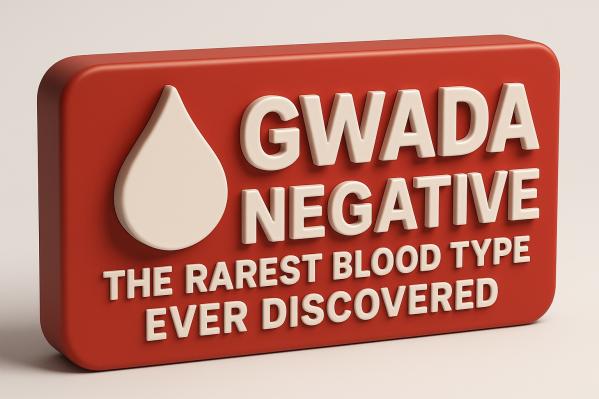
🧩 A Blood Type Unlike Any Other
In a world where blood types like A, B, AB, and O dominate medical charts, imagine a mysterious blood group so rare that science is still catching up to understand it.
That’s the buzz around Gwada Negative—a term gaining viral attention as possibly the most uncommon blood type ever recorded. Though not officially classified by global health authorities yet, the term has triggered a worldwide fascination.
But is it real, or just another social media myth?
In this article, we decode the truth behind Gwada Negative, how it compares to ultra-rare blood types like Rh-null (Golden Blood) and HH (Bombay Blood Group), and why it could be a breakthrough in hematology and human genetics.
🧬 What Exactly Is Gwada Negative?
“Gwada Negative” isn’t listed in any formal blood group database such as the ABO or Rh systems—yet. The name appears to originate from Guadeloupe, a French Caribbean island, suggesting the blood group might stem from a localized genetic anomaly.
It’s believed to refer to a unique antigenic structure on red blood cells that doesn't fit into any currently known blood group system—possibly a completely new antigen absence or a rare hybrid of known groups.
🔎 While there’s no confirmed scientific literature on Gwada Negative, history tells us that all rare blood discoveries—like Rh-null and HH type—started with unexplained anomalies.
💉 How Does Gwada Negative Compare to Other Rare Blood Types?
Here’s how Gwada Negative may stack up against the rarest blood types known today:
| Blood Type | Estimated Prevalence | Key Characteristic |
|---|---|---|
| AB Negative | ~0.6% of global population | Rarest among ABO types |
| Rh-null (Golden) | <0.0001% (~50 known cases) | Lacks all 61 Rh antigens |
| HH (Bombay Type) | ~1 in 10,000 (India), rarer globally | Lacks H antigen, even rarer than O group |
| Gwada Negative | Unknown | Possibly the rarest if confirmed |
🧪 Blood Science: How Rare Types Occur
Blood type is determined by antigens—specific proteins and sugars—on the surface of red blood cells. Most people are familiar with the ABO and Rh systems, but there are dozens more, like:
-
Kell
-
Duffy
-
Lutheran
-
MNS
-
Kidd
Mutations or rare genetic combinations in these systems can result in extremely rare blood types—some of which are dangerous to mismatch in transfusions.
Real-World Examples:
-
Rh-null: No Rh antigens at all; universal donor for Rh-negative people, but can receive only from another Rh-null donor.
-
HH (Bombay Blood): Discovered in India; lacks the H antigen, meaning even O-negative blood is incompatible.
Just like those, Gwada Negative may be a genetic phenomenon, possibly a regional mutation not yet globally documented.
📍 Possible Origins of Gwada Negative
Experts speculate that the term Gwada Negative could be tied to:
-
Genetic Isolation in Guadeloupe – Small island populations often preserve rare genes.
-
Misunderstood Local Variant – It could be an ultra-rare HH or Rh-null case labeled differently.
-
Emerging Blood System – New blood antigens are still being discovered in laboratories.
-
Social Labeling – In some cases, informal names precede formal recognition.
Until full genome-level typing is done, these remain hypotheses—but not without precedent.
🩸 Why Rare Blood Types Matter in Medicine
Rare blood groups aren’t just scientific curiosities—they have real, life-threatening implications:
-
❗ Patients with rare types may die if compatible blood isn't found during surgery or accidents.
-
🧬 They offer insights into human ancestry, evolution, and immunity.
-
🔍 They can expose hidden weaknesses in blood banking systems, especially in emergencies.
That’s why identifying, documenting, and preserving rare blood types is a top global health priority.
🧠 Expert Insights
"Every rare blood discovery starts with a single unexplained case. If Gwada Negative is real, it will transform our understanding of blood biology."
— Dr. M. Bhattacharya, Geneticist & Immunohematologist
"Public awareness is key. Rare donors save lives—especially with types like Rh-null, HH, and potentially Gwada Negative."
— Dr. Karine Dubois, WHO Blood Safety Program
✅ What To Do If You Suspect You Have a Rare Blood Type
Step-by-Step Guide:
-
Get an Extended Blood Test: Go beyond ABO and Rh typing. Ask for complete antigen profiling.
-
Register as a Donor: Specialized rare donor registries exist in India, France, the UK, and the US.
-
Store Your Blood: In certain cases, storing your own blood can be life-saving for future surgeries.
-
Connect with Experts: Hematology labs and genetic counselors can help decode your blood profile.
🧠 Myth vs. Fact
| Claim | Reality |
|---|---|
| Gwada Negative gives superpowers | ❌ No scientific proof |
| It’s the rarest blood type on Earth | ❓ Possibly—if confirmed |
| Only one person has it | ❓ Unverified, but plausible |
| It's the same as HH or Rh-null | ❌ Likely different, but further study needed |
| It originated in the Caribbean | ✅ Likely true, based on linguistic evidence |
🗣️ Final Words
Whether Gwada Negative turns out to be a newly discovered antigen, a sub-variant of HH, or a misnamed form of Rh-null, it has succeeded in one very important mission: creating massive public awareness around rare blood types.
And in a world where blood can mean the difference between life and death, awareness is power.
If validated, Gwada Negative could join the elite circle of ultra-rare blood types, reshaping how we think about genetics, identity, and survival.
Related Articles
-
Parasocial Relationships: The Invisible Bonds Driving the Creator Economy (And Why Brands Pay Millions for Them)
Discover what parasocial relationships really are, why digital connections feel so real, and how influencers, AI, and the attention economy shape trust, emotions, and behavior online....
 created by PolyEyes Staff | publish 11 hrs ago | last updated 11 hrs ago 1858 views | 1 recommendations | 0 comments
 -
🌱 Veganism Explained: Meaning, Diet, Lifestyle, Benefits & Global Impact
Discover everything about Veganism: meaning, diet, lifestyle, benefits, myths, FAQs, and global impact. Learn why veganism is the future of health and sustainability....
created by PolyEyes Staff | publish 11 hrs ago | last updated 11 hrs ago 1316 views | 1 recommendations | 0 comments -
Russia’s Enteromix Cancer Vaccine: A Game-Changer or Just Hype?
Russia claims its Enteromix cancer vaccine is ready and free for patients, with 100% success in early trials. Is this a medical breakthrough or early hype?...
created by PolyEyes Staff | publish 11 hrs ago | last updated 11 hrs ago 1932 views | 1 recommendations | 0 comments -
Magic of Science: Germany Develops Breakthrough Gel That Regrows Joint Cartilage – No Surgery Needed
German scientists have created a revolutionary gel that regrows joint cartilage naturally. No surgery, no implants—just healing. Discover this arthritis and joint pain breakthrough!...
created by PolyEyes Staff | publish 11 hrs ago | last updated 11 hrs ago 23504 views | 1 recommendations | 0 comments -
🌸 Ovulation vs Menstruation: The Ultimate Guide Every Woman Needs to Read
Learn the clear differences between ovulation and menstruation. Understand timing, symptoms, hormones, and fertility insights to improve women’s reproductive health....
created by PolyEyes Staff | publish 11 hrs ago | last updated 11 hrs ago 2164 views | 1 recommendations | 0 comments -
🌿 Unlock the Secret to a Disease-Free Life: Make Your Body Alkaline, Say Naturopathy Experts
Discover how making your body alkaline through naturopathy can help you prevent diseases naturally. Learn the science, foods, habits, and lifestyle shifts that support pH balance and long-term wellness....
created by PolyEyes Staff | publish 11 hrs ago | last updated 11 hrs ago 1303 views | 1 recommendations | 0 comments -
Shree Anna (Millets): India’s Golden Grain for a Sustainable and Nutritious Future
Shree Anna (Millets) is redefining India's agricultural future with its climate-smart, low-cost, and highly nutritious benefits. Backed by government initiatives, these ancient grains are making a strong comeback, offering sustainable solutions for farmers, better health for consumers, and higher pr...
created by PolyEyes Staff | publish 11 hrs ago | last updated 11 hrs ago 1447 views | 1 recommendations | 0 comments -
Bombay Blood (hh) : Must Know Facts About This Rare Blood Type
Bombay blood (hh) is the rarest blood ever discovered. It attains its name from the place of discovery (Bombay, 1952). Bombay blood is very rare and is typically found in 1 Indian out of every 10,000 Indian. Person having Bombay blood can accept only from other Bombay Type blood...
created by PolyEyes Staff | publish 11 hrs ago | last updated 11 hrs ago 6455 views | 1 recommendations | 0 comments -
🌿 Blue Tea Health Benefits 2025: Why This Ancient Brew is Now a Billion-Dollar Wellness Secret
Discover the science-backed health benefits of Blue Tea in 2025 — from boosting brain function and burning fat to balancing blood sugar and enhancing skin health. This caffeine-free herbal drink is the latest global wellness trend with powerful ancient roots....
created by PolyEyes Staff | publish 11 hrs ago | last updated 11 hrs ago 1663 views | 1 recommendations | 0 comments -
👶 IVF in the USA: Top Clinics, Success Rates & Cost Breakdown (2025)
Discover the top IVF clinics in the USA, their 2025 success rates, costs, and what to expect in your fertility journey. Full guide for couples and individuals....
created by PolyEyes Staff | publish 11 hrs ago | last updated 11 hrs ago 4201 views | 1 recommendations | 0 comments








-
Kakori Brand for GI-Tagged Malihabadi Dashehari Mango: How Uttar Pradesh Is Blending Heritage, History and Global Branding
July ,08 2026 - PolyEyes Staff -
JPSC PT Result Without Cut-Off, Final Answer Key Disputes & Just 16 Days for Mains: Why Aspirants Are Calling the 14th Recruitment Process Unfair
July ,06 2026 - PolyEyes Staff -
JPSC 14th Prelims Result Sparks Massive Controversy: No Cut-Off, No Member Signatures, Multiple Correct Answers – Is a Fresh Recruitment the Only Fair Solution?
July ,04 2026 - PolyEyes Staff -
Supreme Court Declares Right to Walk a Fundamental Right: A Landmark Victory for Every Indian
June ,22 2026 - PolyEyes Staff -
JPSC 14th Exam Faces Double Age-Cutoff Crisis: 2018 and 2022 — Why a Fresh Notification May Be the Only Fair Solution
June ,20 2026 - PolyEyes Staff -
Strait of Hormuz: How the Hormuz Crisis Could Trigger a Global Oil Shock and Impact India's Economy
May ,30 2026 - PolyEyes Staff -
🚀 Unemployment in India: Crisis, Causes & the Road to Jobs
April ,16 2026 - PolyEyes Staff -
🦋 Kya Aapko Pata Hai? Titli Ko Udne Ke Liye Do Baar Janm Lena Padta Hai
April ,13 2026 - PolyEyes Staff -
🌊 BIOROCK, Coral Reefs & Rann of Kutch: The Future of Ocean Restoration & Climate Survival
April ,12 2026 - PolyEyes Staff -
🌍 Oil War 2026: USA, Iran, Israel, Venezuela aur Petroleum ka Global Game (Aapki Pocket Ka Silent Killer 😅)
April ,06 2026 - PolyEyes Staff -
🛕🔥 Devari Mandir, Dhoni & CSK: IPL 2026 ka Divine Connection
April ,06 2026 - PolyEyes Staff -
Jharkhand Economy: Complete Notes for JPSC 2026 (Growth, Sectors, Challenges & Opportunities)
April ,05 2026 - PolyEyes Staff -
🤖 Best AI SEO Tools for Bloggers in 2026 (Rank Faster & Grow Traffic)
April ,05 2026 - PolyEyes Staff -
Jharkhand Industrial Policy (2001–2021): Complete Evolution, Analysis & JPSC PT Master Guide (2026)
April ,04 2026 - PolyEyes Staff -
🎓 Best AI Tools for Students in 2026 (Study Smarter, Not Harder)
April ,04 2026 - PolyEyes Staff

Sir I've lost my admit card and I also forget my roll no
Please help me in other ways

Dear Sir,
After login when i click on attempt button to take test a error msg show "Test series ended", plesae resolve this issue.
sir, my name is SWARUP ANAND, my DOB- 01/03/1984, my father’s name- SANTOSH KUMAR SRIVASTWA. I have loss my admit card. Please tell my roll number.
BPSC mains 56th-59th me Roll No. 119040 pass hai aur PT me fail. Mahabhrstachar hai. pls see it must
I am thankful for PolyEyes for most authentic Online BPSC Test Series. These Test are life support for working Aspirant.
sir please tell the authenticity of this news .there is no such news on bpsc website and i heard 17 june as the exam date .please clarify the doubt
r u providing test for BPSC in HINDI medium ?
plz intimate me through emails about BPSC test packages and details of packages and its rate. how many test and when it will be taken plz send details about ur package plans.
Yes Test is available in Hindi as well English and Total Number of Test and Registration details already given above
Best thing im loving about This Test series is its Explanation part. Crisp and to the Point. Thanku Polyeyes.
-
 All Stories
 -
Recently Published Stories
-
Most Viewed Stories
-
Just In Photos
-
Most Viewed Photos
